Today I will share the differences between a desktop computer and a laptop.
The desktop, as we all know, has to be fixed in one place. It is not convenient to carry when traveling/going out. Laptops can be easily carried in a bag. It also has a battery so it can be easily turned on and off where you are. In terms of cost, there is not much difference between a desktop and a laptop. The main advantage of a desktop is that you can customize the hardware depending on the performance you want to use. If you buy a high-performance computer, a desktop will be slightly cheaper than a laptop.
The primary distinction between a desktop and a laptop lies in the fundamental trade-off between stationary power and mobile flexibility. As established, a desktop computer is designed to be fixed in a single location, often requiring a dedicated workspace with external peripherals like a monitor, keyboard, and mouse. This lack of portability is its most significant constraint, making it unsuitable for those who travel or work from varying environments. In contrast, a laptop offers an all-in-one solution that fits into a standard bag. Its integrated battery allows for immediate operation without a constant power source, providing the freedom to work or study in diverse settings such as libraries or transit.
From a financial perspective, the price gap between entry-level laptops and desktops has narrowed significantly. However, a deeper analysis reveals a divergence in value at the higher end of the performance spectrum. When seeking high-performance hardware for intensive tasks like 3D rendering or complex data processing, a desktop typically offers a lower cost-per-performance ratio. This is largely because laptop manufacturers must invest heavily in miniaturization and sophisticated cooling systems to fit powerful components into a slim chassis.
The most substantial advantage of the desktop remains its modularity. Users can customize every internal component the motherboard and graphics card to the cooling fans based on specific technical requirements. This level of customization not only allows for a machine tailored to precise workloads but also extends the device's lifespan. While a laptop's hardware is often soldered and difficult to repair, desktop components can be easily swapped or upgraded as technology advances. Ultimately, the choice depends on whether a user prioritizes the physical freedom of a battery-powered device or the long-term scalability and thermal efficiency of a fixed workstation.
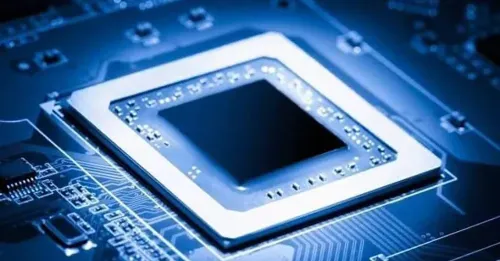
Desktops can be made up of your own processor
GPU, and other hardware, depending on the brand, making them cheaper than laptops with built in hardware. In terms of performance, desktops and laptops with the same processor, GPU, and RAM have better performance than desktops. Laptops come with a limited number of fans, so over time, you may not be able to control the CPU temperature properly, which can lead to crashes (well on Gaming laptops).
The desktop can be fitted with custom fans to better control the CPU temperature. Another advantage of the desktop is the ability to customize the hardware (CPU, GPU, RAM, HDD). On laptops, you can only upgrade the RAM and HDD. Because desktops do not have a battery, high wattage power supplies must be used in conjunction with UPS, and power supplies such as motherboards and HDDs can be sent back through the power supply.
You need to use a motherboard that matches the wattage of the power supply. Too much wattage can damage the motherboard. Laptops already use the wattage that matches the motherboard. The latest features are only available on laptops, so the laptop is here again. Security features like Fingerprint and Face recognition are only available on laptops. Newer laptops come with licensed windows, but desktops do not come with licensed windows. On the desktop, you can easily remove the casing and troubleshoot hardware errors. Laptops and desktops have their advantages and disadvantages.